If you are searching for local plumbers who service the 60085 area of Park City, IL Excel Plumbing is here for you! Excel Plumbing has been making Park City customers happy since 2002, because we guarantee our work and treat our customers the way we would want to be treated. It doesn’t matter what plumbing issue you are facing. No job is too large for our efficient plumbing professionals. Excel Plumbing treats your homes like we treat our own, with respect toward cleanliness and sanitation. Excel Plumbing’s responsive team understands if you have a time-critical need or even a full blown emergency, so we make scheduling extra quick and easy. Our customers receive a complimentary appointment with one of our certified plumbers who are all insured and bonded, so you have no worries about getting the run around. Excel Plumbing has a reputation of trust and when you call on us, you will see why! We are proud to offer superior service to loyal Park City residents, and strive to maintain our excellent reputation by continuing our quest for excellence in customer service and quality of work. We are so committed to making our appointments on time!
Excel Plumbing is the first plumbing service residents of Park City call upon also because we will promptly make any corrections to our work needed or refund your money. After a thorough investigation, our estimators are to the point, making it clear up front what kind of plumbing situation you are facing. We’ll let you know if it’s a minor repair or a major one. We don’t skimp on parts! Excel Plumbing uses only top-brand parts and equipment. We are specialists in all of your plumbing needs. Give Excel Plumbing a call or visit our website, and we will direct you to the Park City area experts. Then, just leave the job to us.
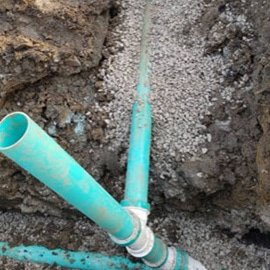
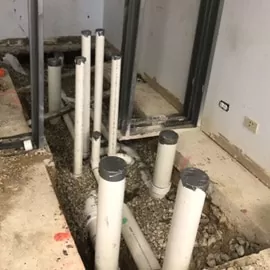
Plenty of Park City homes still run on older clay or cast iron lines. We offer camera sewer and water line inspections, sewer repair and replacement, and water line repair.
Read our reviews on BBB·Yelp·Google·Angi·HomeAdvisor







Cannot be combined with other offers. Restrictions apply, please inquire.

Cannot be combined with other offers. Restrictions apply, please inquire.

Cannot be combined with other offers. Restrictions apply, please inquire.

Cannot be combined with other offers. Restrictions apply, please inquire.

Cannot be combined with other offers. Restrictions apply, please inquire.
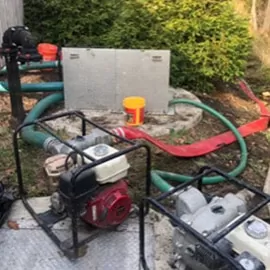
Available for Water Heaters, Sump Pumps, Drain & Sewers,
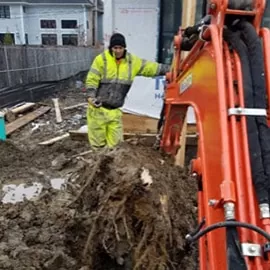
Excavation and other plumbing jobs


|
| As of the 2010 United States Census, there were 7,570 people living in the city. The racial makeup of the city was 45.5% White, 7.4% Black or African American, 5.4% Asian, 1.0% Native American, 0.1% Pacific Islander and 3.9% of two or more races. 65.2% were Hispanic or Latino (of any race).
As of the census[13] of 2000, there were 6,637 people, 2,600 households, and 1,578 families living in the city. The population density was 5,773.0 people per square mile (2,228.3/km2). There were 2,708 housing units at an average density of 2,355.5 per square mile (909.2/km2). The racial makeup of the city was 60.39% White, 7.53% African American, 0.23% Native American, 8.83% Asian, 0.15% Pacific Islander, 17.31% from other races, and 5.56% from two or more races. Hispanic or Latino of any race were 37.76% of the population. There were 2,600 households, out of which 36.2% had children under the age of 18 living with them, 43.0% were married couples living together, 12.3% had a female householder with no husband present, and 39.3% were non-families. 32.7% of all households were made up of individuals, and 7.2% had someone living alone who was 65 years of age or older. The average household size was 2.55 and the average family size was 3.31. In the city, the population was spread out, with 27.9% under the age of 18, 11.5% from 18 to 24, 36.8% from 25 to 44, 16.7% from 45 to 64, and 7.1% who were 65 years of age or older. The median age was 30 years. For every 100 females, there were 103.3 males. For every 100 females age 18 and over, there were 103.4 males. |
Park City is compact, and a significant share of its housing is in manufactured-home communities rather than conventional single-family stock. That is worth saying plainly, because plumbing in a manufactured home is genuinely different from plumbing in a stick-built house, and advice written for one does not transfer to the other.
Everything is underneath, and it is exposed. Supply and waste run in the crawl space under the floor, inside the skirting, rather than inside heated walls. That is why freezing is the dominant winter call here and why it happens at temperatures that would not trouble a conventional basement. Heat tape, intact skirting and insulation around the water line are not optional extras in this housing - they are the system working as designed.
The fittings are not standard. Manufactured homes often use different pipe sizes and fitting types from site-built housing, and a repair made with the wrong parts holds until it does not. It is worth having someone work on it who has seen it before.
Access is the cost. A leak under the floor is rarely difficult to repair once it is reached. Reaching it is the job. That is why a small leak found early is a different proposition from the same leak found after it has been running for a month.
Water heaters live in closets. Usually with no floor drain beneath them, which means a tank failure discharges into the house rather than into a drain. A drip pan plumbed to somewhere sensible is cheap insurance, and we fit them as standard where there is anywhere to run it.
The ordinary rules apply, and the ordinary items are the sewer lateral, the water service and the water heater. If the house predates 1986, the service line may be lead - a dull grey pipe at the basement wall that is soft enough to scratch and will not hold a magnet. Illinois has more lead service lines than any other state, and knowing which you have is worth doing whether or not you act immediately.
Clay tile laterals under mature trees lose to roots at the joints. One backup is a rodding job; two inside a year is structural and worth a camera inspection before booking a third.
Across both kinds of housing here, freezing is the call we take most between December and February. The buried service is below frost depth and is rarely the problem. What splits is the shallow run: under a manufactured home, through a crawlspace, along a garage wall, or the last few feet to a hose bib.
Before the first hard freeze: drain and isolate the outside bibs, check skirting and insulation are intact and heat tape is actually powered, and confirm the main shut-off turns. If a pipe does freeze, shut the water off before thawing it - the split shows itself when the ice melts, and you want to be standing there with the valve already closed.
Call 847-416-2736 or book online. Common work here is emergency plumbing for frozen and burst pipe, water heater repair and replacement, leak detection and sewer rodding.