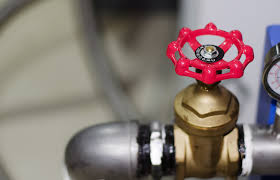
Most Deerfield homeowners with a lawn irrigation system have a reduced pressure zone assembly — an RPZ — sitting somewhere near where the system taps off the house supply. A good number of them do not know it is there, what it does, or that it has to be tested every year by a licensed plumber.
It is a small piece of compliance that quietly becomes a problem: a letter arrives, a deadline has passed, and the test now has to be scheduled in the same fortnight everyone else is scheduling theirs.
Your drinking water is supposed to travel one way: from the main, into the house, out of the taps. A backflow preventer exists because under certain conditions it can travel the other way.
That happens when pressure in the main drops below pressure in your system — a water main break down the street, a hydrant opened for fire fighting, heavy draw elsewhere on the network. When the pressure reverses, whatever is sitting in your irrigation lines can be pulled back toward the main.
For a lawn system that means standing water from around sprinkler heads: fertiliser, weedkiller, pesticide, animal waste, soil bacteria. An RPZ is the device that physically prevents it. It has two independent check valves and a relief port between them, and if either check fails, the relief port dumps to atmosphere rather than letting anything travel backwards.
That design is also exactly why it has to be tested. The failure mode is internal, and a device can be sitting there not working with nothing visible from the outside.
Across Cook, Lake, McHenry and DuPage, annual testing by a licensed plumber is standard practice for irrigation systems, fire sprinkler lines and most commercial supply. Requirements, deadlines and the form the certificate takes are set locally, so the Village of Deerfield is the authority on what applies to your property — worth a call to confirm your own deadline rather than relying on a general rule.
The common residential trigger is the lawn irrigation system. If a contractor installed sprinklers at your house, an RPZ or a similar assembly went in with it, and it falls into the annual testing cycle from that point on.
The test itself is short — typically under half an hour for a residential assembly in an accessible location. A certified tester attaches a calibrated differential gauge to the test cocks on the device and checks three things in sequence:
Water is shut off to the assembly for a few minutes while this happens. The results go on a certificate, which is filed with the village.
Homeowners often assume a test is a formality. It is not — these devices fail regularly, and there is nothing unusual about it when they do.
Debris in the line, mineral scale from hard water, a perished rubber seat, or a spring that has lost tension will all cause a check to pass water. Deerfield’s water is moderately hard, which does not help: scale builds on the internal seats over the years exactly as it does on a water heater element.
The important consequence is procedural. A failed device must be repaired and retested before the certificate can be issued. If you book the test the week your deadline falls and it fails, you now need parts, a second visit and a second test inside a few days.
Most failures are a rubber repair kit rather than a whole new assembly, so the fix is usually not the expensive part. The scheduling is. Testing early in the season, when parts and appointment slots are both available, is the single most useful thing you can do about it.
Because testing means getting hands on an assembly that nobody has looked at for a year, other problems surface:
No. The test must be carried out by a licensed plumber with a certified, calibrated gauge, and the certificate filed with the village. Gauges require periodic recalibration, which is part of what makes the result valid.
Usually a few minutes for a residential assembly. We will tell you before we start so nobody is running a dishwasher in the middle of it.
The requirement attaches to the assembly being installed and connected, not to whether you are currently using it. Confirm your own deadline with the village.
If you have an in-ground sprinkler system, you almost certainly do. It is typically near where the irrigation line leaves the house, sometimes in a protective enclosure. We can identify it during a visit.
Various other connections require backflow protection, though the device type differs. If you are unsure what is on your property, a plumbing inspection will establish it.
The best time to schedule is well before your deadline, so that a failed device still leaves room for a repair and a retest without drama.
Excel Plumbing has served Deerfield and the North Shore since 2002 and has a local office at 151 Estate Dr. We are licensed, bonded and insured — Illinois Plumbing License # 058-170044 — and we file the certificate with the village so the paperwork is not left on your desk.
Call 847-416-2736, read more about RPZ backflow testing, or see everything we cover on our Deerfield plumbing page.
Rated 4.8 out of 5 from 757 customer reviews.
I used excel plumbing for years always on time they know what they do and price is very respectable I wood recommend to everyone I know and I did thanks Excel plumbing!!
Good work, quickly done, very friendly and courteous person
Professional, Great follow through and communication. And the work level is really great
Excellent experience. Very responsive, helpful and efficient with the service/pricing.
On time. Was able to fix my problem right away. Good work fair price.
On time, job done right and reasonably priced
This was my first time using Excel. Tony arrived early, he quickly identified the issue and it was resolved shortly after. He also gave me honest advice about other issues that needed attention in my home. I already scheduled another appointment with him to address those less urgent issues.
I have used Excel Plumbing several times and have been happy with their work. They gat the job done and don't overcharge.